
# Best Questions to Ask a Photo Editor Before Hiring
Hiring a professional photo editor can help you save time, improve image quality, and maintain a consistent appearance across your photographs. However, finding the right person or company is not always easy.
Some photo editors specialize in portraits and beauty retouching, while others focus on jewelry, clothing, real estate, wedding photography, or e-commerce products. Their editing techniques, pricing, experience, and delivery processes can vary considerably.
So, how do you know which photo editor is right for your project?
The answer starts with asking the right questions before making a decision.
You may find an editor with an impressive portfolio, but beautiful sample photographs do not automatically mean they can handle your specific requirements. A jewelry photograph may require careful reflection cleanup and precise gemstone details, while a clothing image may need background removal, wrinkle correction, and accurate fabric colors.
It is also important to discuss the editing price, turnaround time, revision policy, file security, and communication process.
These details can influence the overall experience just as much as the quality of the final photographs.
In this guide, we will discuss the **best questions to ask a photo editor before hiring**, explain why each question matters, and share practical tips for choosing someone who can meet your editing requirements.
Why Is It Important to Ask Questions Before Hiring a Photo Editor?
Hiring a photo editor is more than finding someone who knows how to use Photoshop.
A professional editing service should understand your project, follow your instructions, and deliver photographs that meet your expectations.
Asking questions before starting helps you evaluate the editor's experience, communication, workflow, and quality standards.
It also gives you an opportunity to explain your project clearly.
For example, imagine hiring someone to edit 200 jewelry photographs.
You want unwanted dark reflections reduced, but the original metal colors, gemstone arrangement, ring dimensions, and natural textures must remain unchanged.
If these requirements are not discussed, the editor might remove too many reflections or alter details that should have been preserved.
Clear communication helps prevent these problems.
It can also reduce unexpected charges, missed deadlines, and repeated corrections.
By asking thoughtful questions, you can compare different editing providers and make a more informed hiring decision.
1. What Types of Photo Editing Do You Specialize In?
One of the first questions to ask is which photography categories the editor regularly works with.
Photo editing covers many different subjects, and each category requires specific skills.
For example, portrait retouching focuses on skin texture, facial details, hair cleanup, and natural lighting.
Jewelry editing involves reflective metal surfaces, gemstones, prongs, engravings, and carefully controlled details.
Apparel editing may require ghost mannequin work, wrinkle correction, fabric color matching, and background cleanup.
Real estate editing often includes exposure balancing, perspective correction, and window detail adjustments.
An editor who is experienced in wedding photography may not automatically have the skills needed for complicated jewelry retouching.
Ask the editor about their main specialty and the types of projects they handle most frequently.
If your business works with a particular product category, look for relevant experience.
**Why this matters:** Specialized experience can help an editor recognize which details should be improved and which should remain unchanged.
2. Can I See Your Before-and-After Editing Samples?
A portfolio is one of the best ways to evaluate an editor's previous work.
However, finished photographs alone may not show how much work was completed.
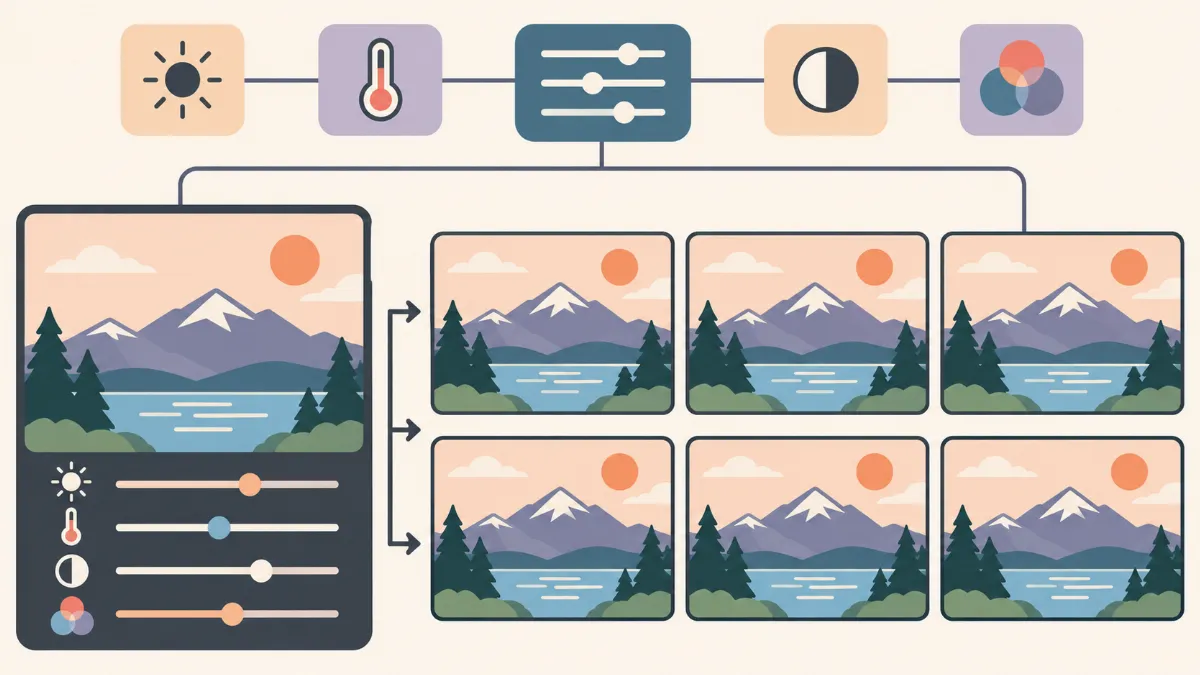
Before-and-after samples allow you to compare the original photograph with the edited result.
This helps you examine the quality of the corrections.
Look for improvements in lighting, color accuracy, background cleanliness, and fine details.
For portrait photographs, check if skin texture and facial features remain natural.
For jewelry, examine gemstone clarity, metal reflections, and product structure.
For clothing, look at fabric textures, seams, garment proportions, and color consistency.
Avoid judging samples only by how attractive the edited images appear.
The most important question is if the editor improved the photograph while preserving the original subject accurately.
If the editor cannot share previous client images because of confidentiality agreements, ask for approved portfolio samples or demonstration work.
3. Do You Offer a Free Trial Edit or Sample Test?
A trial edit can help you evaluate an editor before committing to a large project.
Instead of relying entirely on portfolio images, you can provide one or more photographs from your actual workflow.
Include instructions explaining the corrections you need.
For example, a jewelry business might request a test image with reduced black reflections, clean metal edges, accurate gold color, and preserved gemstone details.
A clothing retailer might request background removal, fabric color correction, and ghost mannequin editing.
Once the sample is completed, compare it with your original photograph and reference images.
Check the editing quality, accuracy, and attention to detail.
Also evaluate how well the editor followed your instructions.
Some providers offer free sample edits, while others charge for trial work.
Confirm the conditions before sending files.
**Why this matters:** A test image provides direct evidence of the editor's ability to handle your specific requirements.
4. What Editing Techniques and Software Do You Use?
Different editing tasks require different tools.
Many professional editors use Adobe Photoshop, Lightroom, Capture One, or other specialized editing applications.
However, the software alone does not determine the quality of the final result.
It is more useful to ask how the editor approaches particular problems.
For example, detailed product background removal may require manual clipping paths or layer masks.
Portrait retouching may involve healing tools, selective adjustments, and carefully controlled skin corrections.
Jewelry editing may require localized reflection cleanup, color correction, and manual attention to gemstone details.
Ask if the editor uses non-destructive editing techniques when appropriate.
You can also discuss the use of AI-assisted tools.
AI can help with certain tasks, but automated results should be reviewed carefully, especially when product accuracy matters.
A good editor should be able to explain their workflow in simple terms.
5. How Do You Maintain the Original Details of My Photos?
This question is particularly important for commercial photography.
The purpose of professional editing is not always to make an image look dramatically different.
Often, the goal is to improve presentation while preserving the real subject.
For example, a diamond engagement ring should retain its original shape, gemstone arrangement, metal thickness, prongs, and engravings.
A clothing product should maintain its actual color, stitching, texture, and design.
A portrait should preserve recognizable facial features and natural skin characteristics.
Ask the editor how they prevent unnecessary changes.
You can also provide written instructions listing details that must remain unchanged.
For complex projects, reference photographs are especially useful.
They help establish a clear standard that the editor can follow.
**Why this matters:** Accurate editing protects the integrity of the original photograph and reduces the risk of misrepresenting products.
6. How Much Do Your Photo Editing Services Cost?
Pricing is one of the most common concerns when hiring a photo editor.
Some editing companies charge per image, while others use hourly rates or project-based quotations.
The cost depends on several factors, including editing complexity, image volume, turnaround time, and required corrections.
For example, basic background removal may cost less than detailed jewelry retouching.
A photograph that requires only exposure correction may take less time than one needing complicated object removal.
Ask the editor to explain their pricing structure.
Find out what is included in the quoted amount.
You should also ask about minimum order requirements, additional charges, and possible discounts for recurring projects.
If you have several editing categories, request separate rates when appropriate.
For example, you might need one rate for basic product editing and another for detailed retouching.
A clear quotation allows you to plan your budget and compare providers more accurately.
7. Do You Offer Discounts for Bulk Photo Editing?
If you regularly work with large image collections, ask about volume pricing.
Some editing providers offer lower per-image rates for recurring or high-volume projects.
For example, a clothing business may need several hundred product images edited every month.
A jewelry retailer may release seasonal collections requiring multiple views of each product.
A wedding photographer may have hundreds of images requiring basic adjustments.
Bulk pricing can be useful when photographs have similar editing requirements.
However, high image volume does not automatically mean every image can be edited at the same rate.
Complicated retouching may still require individual attention.
Ask how the provider calculates discounts and if there are minimum monthly volumes.
Also confirm that quality standards and revision policies remain consistent.
8. What Is Your Average Turnaround Time?
Turnaround time is important when you have publishing deadlines, product launches, or client delivery schedules.
Ask how long the editor usually needs to complete a project.
The answer may depend on the number of images and the required editing work.
For example, basic background removal on 50 simple product photographs may be completed faster than detailed retouching on 50 complicated jewelry images.
Ask the editor to explain how the delivery schedule is calculated.
You should also clarify when the turnaround period begins.
Does it start when the files are received, when payment is confirmed, or when all instructions are approved?
If your project is time-sensitive, communicate the deadline before sending the images.
Avoid assuming every editing provider offers the same delivery speed.
9. Can You Handle Urgent or Rush Orders?
Some photography projects require faster delivery than normal.
For example, an online store may need photographs ready before a product launch.
A photographer may have an unexpected client deadline.
Ask if the editor accepts urgent orders.
Find out if rush processing involves additional fees.
You should also ask if the provider can maintain the same quality standards during urgent projects.
Faster delivery should not automatically mean skipping important quality checks.
If rush orders are common in your business, discuss how the editor handles priority scheduling.
A realistic delivery agreement is better than an unrealistic promise.
10. How Many Images Can You Edit Per Day?
Daily production capacity is particularly important for businesses that need ongoing editing support.
For example, an e-commerce retailer may require 100 or more product images each day.
Ask how many photographs the editor can realistically complete while maintaining the required quality.
Capacity depends on the editing complexity.
A provider may process many simple background removal images per day but considerably fewer detailed jewelry photographs.
You should also ask how capacity changes during busy periods.
If your image volume is expected to increase, explain your anticipated requirements.
This helps determine if the provider can support your future workload.
11. What Is Your Revision Policy?
Revisions are an important part of professional photo editing.
Even when instructions are clear, a delivered photograph may occasionally need a correction.
Ask how the editor handles revision requests.
Important questions include:
- Are revisions included in the original price?
- Are there limits on the number of corrections?
- How quickly are revisions completed?
- Which changes qualify as revisions?
- Are additional creative changes charged separately?
For example, if a requested dust spot was missed, correcting it may fall within the original editing instructions.
However, changing the entire background style after final approval may be treated as additional work.
Revision policies vary between providers.
Make sure you understand the terms before starting.
**Why this matters:** Clear revision terms help prevent unexpected costs and disagreements after delivery.
12. How Do You Handle Editing Instructions and Reference Images?
Clear instructions are important for achieving consistent results.
Ask how the editor receives and organizes project requirements.
Some editing companies use email, shared folders, project management systems, or messaging applications.
Others provide structured instruction forms.
Explain your preferred background colors, cropping requirements, color standards, and retouching limits.
If you have approved sample photographs, provide them as references.
For example, a jewelry brand may want every ring photographed against the same champagne-beige background.
A clothing company may require consistent garment positioning and neutral white balance.
Ask how the editor makes sure these requirements are followed throughout the project.
For large collections, an approved reference sample can serve as a useful quality standard.
13. How Do You Check Image Quality Before Delivery?
Quality control is one of the most important factors when choosing a professional photo editor.
Even experienced editors can overlook small problems.
A final review helps identify errors before the images are delivered.
Ask if the provider performs a separate quality check.
Find out which details are reviewed.
For product images, quality control may include:
- Accurate product colors
- Clean background edges
- Correct image dimensions
- Preserved product proportions
- Consistent lighting
- Proper sharpening
- Removal of requested distractions
- Correct file formats
For jewelry images, additional checks may involve gemstone details, prong structure, metal reflections, and engravings.
For portraits, reviewers may examine natural skin texture, facial features, and unwanted retouching artifacts.
An established quality control process can help maintain consistency across large projects.
14. Will the Same Editor Handle My Projects?
Consistency can become a concern when different people edit photographs using different techniques.
For example, one editor may prefer stronger contrast, while another uses softer tones.
If several people work on the same product collection, the final images may look inconsistent without clear standards.
Ask who will handle your photographs.
You can also ask if the provider uses approved reference images or a shared editing guide.
Some companies assign dedicated editors to recurring clients.
Others use teams with centralized quality checks.
Either approach can work when the editing requirements are clear and consistently followed.
The important factor is maintaining the same quality standards across the project.
15. How Do You Protect Confidential Photos and Client Files?
File security is especially important for businesses handling unpublished products, private portraits, or confidential photography projects.
Ask how the editing provider receives, stores, and manages your images.
You may want to know who can access the files and how long they are retained.
Other useful questions include:
- Do you support nondisclosure agreements?
- Are files stored locally or through cloud services?
- Who has access to the original images?
- How are files transferred?
- Can I request early file deletion?
- Do you use external services or AI tools that upload images?
If your project includes confidential products or personal images, communicate any special requirements before sending files.
A clear file-handling policy helps you evaluate if the provider meets your business requirements.
16. Do You Outsource Editing to Other Companies?
Some photo editing providers complete all work internally.
Others subcontract part of their production to external freelancers or companies.
Ask who will actually handle your photographs.
This question is especially relevant when confidentiality, consistency, and quality control are priorities.
If subcontractors are involved, ask how the provider manages access permissions, instructions, and quality standards.
You can also discuss restrictions on external file sharing.
The most important consideration is that you know how your project will be handled and that the agreed requirements are followed.
17. What File Formats Can You Deliver?
The final image format matters because different platforms and production workflows have different requirements.
Ask which formats the editor can provide.
Common options include JPEG, PNG, TIFF, and editable PSD files.
JPEG is commonly used for websites, product listings, and everyday image delivery.
PNG is useful when transparency is needed.
TIFF may be appropriate for professional workflows requiring high-quality image storage.
PSD files can preserve editable layers when requested.
Ask if multiple output formats are included in the price.
Also specify image dimensions, color profiles, resolution requirements, and file naming conventions.
Providing these details early can reduce additional conversion work later.
18. Can You Match My Existing Editing Style?
Many photographers and businesses already have an established visual style.
For example, a wedding photographer may prefer warm tones and soft contrast.
A clothing brand may use neutral backgrounds and consistent product alignment.
A jewelry business may prefer carefully controlled metal reflections and a specific background color.
Ask if the editor can follow your existing style.
Provide several approved photographs rather than relying only on verbal descriptions.
You can also explain which elements must remain consistent.
However, exact matching may be limited by differences in the original photographs.
An experienced editor should be able to explain what can realistically be achieved.
19. What Happens if the Original Photo Has Problems?
Not every photography problem can be completely corrected through editing.
Severe blur, missing image details, heavy compression, and extreme exposure problems may limit the result.
Ask how the editor handles photographs with technical issues.
Will they inform you before attempting complicated repairs?
Can they recommend a reshoot when necessary?
Do they charge more for difficult images?
For example, a product photograph that is completely out of focus may not be suitable for accurate commercial retouching.
Similarly, an image with missing gemstone details cannot always be repaired without introducing artificial information.
A reliable editor should communicate these limitations instead of promising unrealistic corrections.
20. Do You Use AI Photo Editing Tools?
AI-assisted tools are increasingly common in photo editing workflows.
They may help with background removal, subject selection, noise reduction, and repetitive adjustments.
However, automatic results can sometimes change important details.
For example, generative tools may alter the shape of jewelry, change clothing textures, or introduce information that was not present in the original photograph.
Ask the provider which tasks use AI and how results are reviewed.
If your project requires strict product accuracy, explain which details cannot be changed.
You may also want to know if your files are uploaded to third-party AI services.
The goal is not necessarily to avoid automation.
It is to make sure the editing process meets your quality, privacy, and accuracy requirements.
21. How Do You Communicate During a Project?
Communication is an important part of the editing process.
Ask how the editor provides updates, asks questions, and responds to feedback.
Common communication methods include email, project management systems, and business messaging applications.
If your team operates in a different time zone, discuss working hours and response expectations.
For example, an international photography business may send files while the editing provider is working in another country.
Agree on how urgent questions and revision requests should be handled.
Clear communication can help prevent delays and misunderstandings.
22. Can You Support Recurring or Long-Term Projects?
Some clients need editing only occasionally.
Others require daily, weekly, or monthly support.
If your business regularly produces photographs, ask if the provider can support recurring projects.
Discuss expected image volumes and seasonal changes.
For example, a clothing retailer may release several collections throughout the year.
A jewelry business may need additional editing during holiday promotions.
Ask how the editor handles increased workloads and maintains consistency between batches.
You can also discuss volume pricing and long-term editing guidelines.
A repeatable workflow may reduce the amount of instruction needed for future projects.
23. What Happens if a Delivery Is Delayed?
Deadlines matter, especially for commercial photography.
Before hiring, ask how the provider handles unexpected delays.
Find out how they communicate schedule changes.
You may also want to clarify any contractual remedies for missed deadlines.
For example, if your product launch depends on receiving images by a specific date, communicate that requirement before the project begins.
A reliable provider should establish realistic delivery expectations and explain possible limitations.
24. Can You Provide Client References or Testimonials?
Client feedback can provide additional information about an editor's reliability and service quality.
Ask if the provider has reviews, testimonials, or references from previous clients.
Look for feedback related to communication, image accuracy, turnaround time, and revisions.
However, testimonials should not replace your own evaluation.
Some providers may be unable to disclose client names because of confidentiality agreements.
In that case, approved examples and sample editing tests may provide more useful evidence.
A combination of portfolio review, test editing, and clear project terms is a practical approach.
25. What Makes Your Photo Editing Service Different?
This question allows the provider to explain their approach.
Different companies may focus on different strengths, such as specialized retouching, manual editing, quality control, production capacity, or communication.
Ask for concrete examples rather than general promises.
For example, a provider might explain how they maintain accurate jewelry colors, review complicated clipping paths, or organize large batches of product photographs.
You can then compare those capabilities with your project requirements.
The best provider is not necessarily the one with the longest list of services.
It is the one whose experience, process, and quality standards match your needs.
How to Compare Different Photo Editing Services
After asking these questions, organize the information you receive.
Comparing providers using the same criteria can help you make a more informed decision.
| Evaluation factor | What to check |
|---|---|
| Editing experience | Relevant portfolio and specialties |
| Sample quality | Before-and-after results |
| Pricing | Clear rates and additional fees |
| Delivery | Realistic turnaround time |
| Revisions | Written correction policy |
| Communication | Clear and dependable responses |
| Quality control | Defined image review process |
| File security | Storage, access, and retention policies |
| Capacity | Ability to manage expected image volume |
| Consistency | Approved references and editing guidelines |
Consider which factors matter most for your particular project.
For example, a jewelry business may prioritize product accuracy and detailed retouching.
A wedding photographer may prioritize consistent colors and large-volume editing capacity.
A marketing agency may prioritize deadlines and organized communication.
Common Mistakes When Hiring a Photo Editor
Even with many providers available, several common mistakes can make the hiring process more difficult.
Choosing Only Based on Price
The lowest quotation may not include every correction you need.
Compare the editing scope and quality before making a decision.
Skipping the Sample Edit
Portfolio images may not reflect the complexity of your own photographs.
A test can provide more relevant information.
Giving Vague Instructions
Requests such as "make it better" may lead to different interpretations.
Explain the specific corrections required.
Ignoring Revision Terms
Without clear revision policies, additional charges may become a problem later.
Forgetting About File Security
Confidential photographs require appropriate storage and access controls.
Expecting Every Photo to Be Fully Repairable
Some original images contain limitations that editing cannot accurately correct.
Sending Large Projects Without Approval Samples
For recurring work, approving a representative sample before processing the full collection can help reduce inconsistencies.
When Should You Hire a Professional Photo Editing Company?
Hiring an individual editor may be suitable for occasional projects or specialized creative work.
A photo editing company may be useful when you need recurring production support, a larger editing capacity, or an organized quality review process.
For example, an e-commerce business may require hundreds of product photographs edited every month.
A jewelry retailer may need detailed reflection cleanup and consistent backgrounds across multiple product collections.
A clothing brand may require ghost mannequin editing, color matching, and background removal.
A real estate photography company may need recurring exposure correction and image preparation.
Before choosing a company, evaluate its previous work, production process, communication, and ability to follow your instructions.
The best arrangement depends on the complexity and frequency of your projects.
How Photo Editing Company Can Help With Your Editing Projects
At **Photo Editing Company**, we provide editing services for photographers, online sellers, jewelry businesses, clothing brands, real estate professionals, and other clients.
Our services include:
- Jewelry photo retouching
- Product photo editing
- Background removal
- Manual clipping paths
- Ghost mannequin editing
- Apparel photo retouching
- Color correction
- Portrait and headshot retouching
- Wedding photo editing
- Real estate photo editing
- Image resizing and cropping
We work with original photographs, client instructions, and reference images to establish the required editing approach.
Our goal is to improve the presentation of photographs while maintaining important product characteristics and natural details.
If you are considering professional editing support, you can send representative images and explain the corrections you need.
This provides a clearer starting point for discussing quality requirements, pricing, and delivery.
Learn more about our services at Photo Editing Company.
Frequently Asked Questions
What Should I Ask a Photo Editor Before Hiring?
Ask about their experience, specialties, before-and-after samples, pricing, turnaround time, revision policy, quality control, and file security.
If your project involves specific editing requirements, provide representative images and request a sample.
Should I Request a Free Trial Edit?
A trial edit can help you evaluate how well an editor follows instructions and handles your photographs.
Some providers offer free samples, while others charge for test work.
Confirm the terms before sending your images.
How Much Does It Cost to Hire a Photo Editor?
Costs depend on editing complexity, image volume, turnaround time, and provider.
Basic corrections may cost less than detailed commercial retouching.
Request a quotation based on your actual images.
How Do I Know if a Photo Editor Is Good?
Review relevant before-and-after samples.
Look for accurate colors, clean details, natural retouching, and consistent results.
Also consider communication, reliability, and the provider's willingness to follow specific instructions.
Do Professional Photo Editors Offer Revisions?
Many providers offer revisions, but policies vary.
Some include corrections within the original instructions, while others limit revisions or charge for additional changes.
Ask for the terms in writing.
Can I Hire a Photo Editor for Hundreds of Images?
Yes. Some professional editing companies specialize in handling large image collections.
Before starting, confirm production capacity, turnaround time, pricing, and quality control.
Should I Hire a Freelancer or Photo Editing Company?
A freelancer may be suitable for smaller projects or specialized creative editing.
An editing company may be useful for recurring projects or larger volumes.
Compare actual capabilities rather than relying only on the provider type.
Can Photo Editors Keep My Images Confidential?
Many editing providers support confidentiality requirements, but their policies differ.
Ask about nondisclosure agreements, file storage, access permissions, subcontracting, and retention periods.
Can a Photo Editor Match My Existing Editing Style?
Many editors can work from approved reference images.
Provide examples and explain which elements must remain consistent.
The result will also depend on the quality and characteristics of the original photographs.
What Files Should I Send to a Photo Editor?
Send the highest-quality original photographs available, detailed editing instructions, reference images, required output dimensions, file formats, and delivery requirements.
These details help establish clear expectations.
Final Thoughts
Hiring a photo editor is an important decision, especially when image quality affects your business, professional portfolio, or client projects.
The right editor should have relevant experience, follow your instructions, communicate clearly, and deliver photographs that meet your requirements.
Before hiring, take time to review before-and-after samples, discuss editing techniques, request a trial when appropriate, and clarify pricing.
You should also ask about turnaround time, revisions, quality control, and confidential file handling.
For projects involving jewelry, clothing, portraits, real estate, or other specialized photography, experience with the specific image category matters.
Clear reference images and written instructions can help reduce misunderstandings and maintain consistency.
Remember that professional photo editing is not only about making photographs look attractive.
It is also about preserving important details, following client requirements, and preparing images for their intended use.
**The best photo editor is someone who can improve your photographs while respecting your original images, project requirements, budget, and delivery expectations.**